DIRECTV: TV & Movie Streaming
- 4.6
- Rating
- 10.00M
- Installs
- Free
- Price

 Analysis by App-foxy
I approached DIRECTV: TV & Movie Streaming as an entertainment app first, but the more important question for me was whether it feels manageable in everyday use. Watching television on a phone or tablet is easy enough; deciding what to sign into, what to share, and what kind of viewing routine the app actually suits is where the practical differences appear. My experience is that DIRECTV is most useful for people who already want a broad television service in one place, especially live channels, news, sports, movies, and shows, rather than a small on-demand library.
The app comes from DIRECTV, LLC and is free to install, although access to its full viewing experience can involve in-app purchases ranging from around five dollars to around eighty-three dollars per item. That distinction matters. I would not treat the free download as the same thing as free television. Before committing time to setup, I would check the available account and subscription choices carefully, because the value depends heavily on what you want to watch and how often you will use it.
How DIRECTV fits into real viewing habits
I find DIRECTV easiest to judge by the routine I bring to it: whether I want a particular live channel or event, or just need something to watch. That distinction helps me decide when to open the app and when another service would be simpler. From there, I look at the small repeatable habits that make viewing and account choices less rushed.
You May Also Like

 Blood Strike: 2.5 Anniversary
Blood Strike’s Loadouts Turn Every Drop Into a Tactical Gamble
A close look at Blood Strike’s custom loadouts: how fast access to signature weapons reshapes its battle royale rhythm, rewards preparation, and narrows the gap between fights.

 Pandora - Music & Podcasts
Pandora’s Music Is Easy to Start, but Harder to Recover
Pandora’s strength is its low-effort path from a seed to a station. Its weak spot is how much confidence it asks you to place in connection, setup, and quiet recovery.

 8 Ball Pool
 Is Built on Rivalries, Rematches, and Routine
A close look at the rivalries, rematches, shared routines, and unanswered safety questions that turn a quick pool match into a persistent mobile community.

 Samsung Music
’s Quiet Strength Is Playing What You Already Own
Its reach comes less from spectacle than from dependable access to a personal library. That simplicity is both the app’s strongest retention engine and its ceiling.

 AccuWeather: Weather Radar
AccuWeather Review: A Quick, Clear Forecast for Everyday Decisions
For everyday plans, the best forecast is the one you can understand quickly. AccuWeather makes rain timing, radar, and local conditions easy to act on, with a few trade-offs.

 Hill Climb Racing
Why Hill Climb Racing Still Turns Crashes Into One More Run
A tiny car, a bumpy hill and one more upgrade: Hill Climb Racing keeps resurfacing because its simple chaos makes every near-miss feel personal.
More From Our News Desk



A familiar television experience with a mobile starting point
DIRECTV has been available since late 2016, and its scale is reflected in an average rating of 4.6 from around 117 thousand ratings, with more than 10 million installs. Those numbers do not guarantee that every device or account will feel perfect, but they do tell me this is an established entertainment app rather than a short-lived experiment. The Teen content rating also gives families a useful starting signal: I would still check individual programs, but I would not assume the app is designed only for small children.
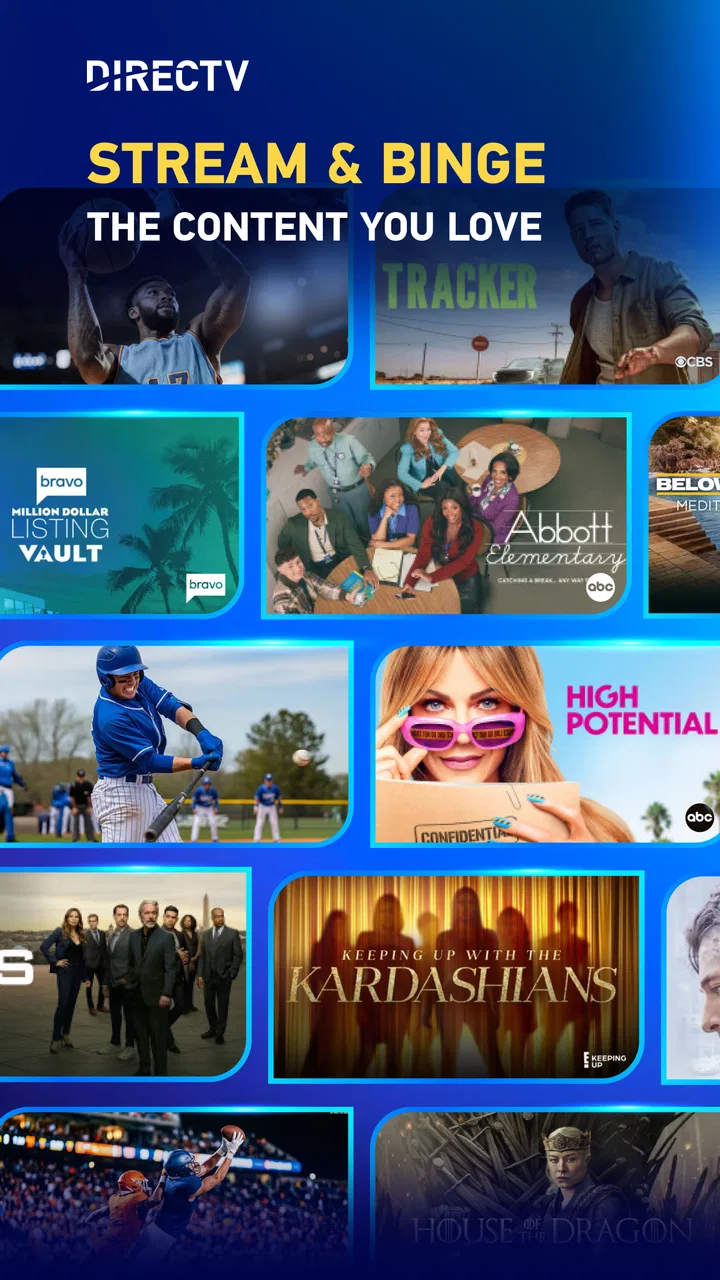
What I like about the concept is the mix of live and on-demand viewing. A purely on-demand service is excellent when I know exactly which series or film I want, but it can make live news, scheduled sports, and ordinary channel browsing feel secondary. DIRECTV is aimed at the opposite habit: opening the app to see what is happening now, then moving into movies or television shows when the live schedule is not appealing.
That makes it a stronger candidate for a household that still thinks in terms of channels and events. Someone who wants to follow a live game, keep up with news, and occasionally watch a movie may get more from it than someone who only wants a carefully selected collection of original series. In the latter case, a focused on-demand service can be simpler and easier to budget.
The everyday scenario where it makes sense
Imagine a weekday evening when I am away from the main television. I might open the app for a news channel, switch to a live sports broadcast, and later look for a film without changing between several unrelated services. That kind of transition is the app’s clearest practical advantage. It reduces the need to remember which provider carries which type of content, provided my account plan supports what I am trying to watch.
The same arrangement can work during travel or a short break at home, but I would be realistic about screen size and connection quality. A phone is convenient for checking a live program or watching a few minutes while moving around. For a full movie, a tablet or television screen is more comfortable. The app is therefore best viewed as an extension of a television subscription, not automatically as a replacement for every other way of watching.
Where the broad approach creates friction
A large mix of live channels, sports, news, movies, and shows can also make discovery feel less direct than a specialized streaming catalog. If I already know the exact title I want, I prefer a search path that gets me there immediately. If I am browsing, the abundance can be useful, but it can also encourage aimless scrolling. I found the service more convincing when I had a viewing purpose than when I expected it to invent my evening for me.
There is also a financial trade-off. Because the app is free to download but includes paid items, I would not compare it with a free video app simply because both appear in the same app store. I would compare the total cost of the viewing access I need with the cost of separate services. DIRECTV can be sensible when live programming is central; it is less compelling if I mainly want occasional films and do not care about channels or sports.
Trust begins with what I can see before watching
For me, trust in a streaming app is not just about the developer’s name or the number of people who installed it. It begins with clear choices around signing in, selecting access, and understanding when a viewing request may lead to a purchase. I would take a moment to read each screen rather than tapping through setup automatically. This is especially important on a shared device, where another person may later open the app under the same account.
The visible age classification and the app’s entertainment focus help set expectations, but they are not substitutes for household rules. I would use the Teen label as a prompt to review what younger viewers can access, not as a promise that every program will suit every family member. In practice, the most reliable control is still an adult deciding which account is used and which content is selected.
Account choices deserve deliberate attention
My practical advice is to separate three decisions that are easy to blur together: installing the app, signing into an account, and paying for access. They may happen close together, but they are not the same commitment. I would first establish whether the app covers the channels and types of programming I actually watch. Then I would review the account screen and any purchase wording. Only after that would I choose an option that matches my routine.
This workflow is more useful than relying on a headline price. The listed in-app purchase range runs from around five dollars to around eighty-three dollars per item, which is wide enough that a casual viewer and a committed live-TV household could be making very different decisions. I would also avoid starting a purchase during a rushed moment, such as just before a game, because urgency makes it easier to overlook the exact access being selected.
On a family tablet, I would be particularly careful about who can use the device and whether the account remains signed in. On my own phone, I would still check the purchase confirmation screen. These are small habits, but they give me more control than treating the app as an anonymous video player.
Data-sensitive moments in normal use
Streaming apps naturally involve moments where I become more identifiable: account creation, sign-in, choosing a viewing plan, and making a purchase. I would treat those moments differently from simply opening an app to browse. I do not need to make a dramatic decision every time I watch, but I do want to know which account I am using and whether the screen is asking me to authorize something that affects billing.
The safest routine is to keep account details accurate, use a device I control, and review any confirmation before accepting it. If I share a television or tablet, I would sign out when appropriate instead of assuming the next viewer will use a separate profile. That is not a criticism unique to DIRECTV; it is the practical consequence of putting paid television access on a device used by more than one person.
I would also avoid judging trust from the app’s smoothness alone. A polished player can still require careful attention to account settings, while a moment of loading does not automatically mean something is wrong with the service. My confidence would come from visible explanations and choices at the points where access or payment is involved, not from assuming that convenience removes the need to check.
How it compares with ordinary alternatives
Compared with a traditional channel-only television setup, the app is more flexible because I can carry the viewing experience to a mobile device. Compared with a narrow on-demand service, it is more useful when live news, sports, and channel surfing matter. Compared with free video platforms, it is a different proposition altogether: the appeal is organized television access rather than an endless collection of unrelated clips.
I would choose a specialized on-demand service instead if my priority were a small number of specific series, predictable browsing, and no interest in live programming. I would choose a free video platform if I wanted occasional casual viewing and did not need a structured channel lineup. I would choose DIRECTV when the convenience of combining live television with movies and shows justifies the account and purchase decisions that come with it.
That comparison also explains why two people can give the app very different verdicts. A sports-focused household may value the live side every week, while a viewer who watches one film every few weeks may find the broader service unnecessary. The app is not automatically better because it offers more categories. Its advantage appears when those categories match a real routine.
Useful habits for getting more from the app
Decide your main viewing purpose first. If the answer is live sports or news, begin by checking those areas rather than browsing every movie and show. If your answer is occasional on-demand viewing, compare the overall commitment with a simpler catalog service before paying.
Use the free installation as an evaluation step. Install it, inspect the sign-in and purchase flow, and think about the devices on which you will watch. That gives you a clearer decision than assuming the download itself represents the whole service.
Keep shared-device viewing intentional. On a family television or tablet, confirm which account is active before starting a program or purchase. This is a small check that protects user agency when several people use the same screen.
Match the screen to the activity. A phone is handy for a quick live update or short viewing session, while a larger screen is the better choice for a long film. Treating the mobile app as a companion rather than forcing every session onto a phone makes the experience more comfortable.
Who should use it, and who should skip it
I would recommend trying DIRECTV to someone who wants live channels alongside sports, news, movies, and television shows, and who is comfortable managing an account rather than using a completely free video service. It is also a reasonable fit for households that want one familiar television-oriented app available beyond the main screen.
I would be more cautious about recommending it to a viewer who only wants one particular series, watches very rarely, or wants a service with no purchase decisions to consider. That person may prefer a smaller, more focused alternative. I would also tell parents and shared-device users to pay attention to the Teen rating and to make their own content and account decisions instead of assuming the label handles everything.
My final view is cautiously positive. DIRECTV, LLC has built an established entertainment app with a strong case for live viewing and a useful bridge into movies and shows. The 4.6 average and broad adoption suggest that many people find it worthwhile, but popularity does not remove the need to check access and payment choices. The best reason to install it is a genuine need for live television in a flexible app, not the promise of a free download alone.
I would keep it if my weekly routine included live channels, news, or sports often enough to justify the access. I would skip it if my viewing was occasional and entirely on-demand. In other words, the app earns my recommendation when I approach it as a carefully chosen television service, with account controls and purchase screens treated as part of the experience rather than background details.
FAQs for DIRECTV: TV & Movie Streaming
01What devices are compatible with the DIRECTV app?
The DIRECTV app is compatible with a wide range of devices, including most Android and iOS smartphones and tablets. Additionally, it can be used on certain smart TVs and streaming devices. It's important to ensure your device's operating system is up-to-date for the best experience.
02Can I download shows and movies for offline viewing?
Yes, DIRECTV allows you to download select shows and movies to your device for offline viewing. This feature is particularly useful for users who want to watch content without an internet connection, such as during travel. Not all content may be available for download due to licensing restrictions.
03Is there a limit to how many devices I can use with my DIRECTV account?
DIRECTV typically allows streaming on multiple devices simultaneously, but the exact number can depend on your subscription plan. For most plans, you can stream on up to three devices at the same time. It's advisable to check your specific plan details for any device limitations.
04Does DIRECTV offer parental controls?
Yes, DIRECTV includes parental controls to help manage what content is accessible to children. Parents can set restrictions based on content ratings, block certain channels, and set PIN codes to prevent unauthorized access. This feature provides peace of mind for families with young children.
05What internet speed is recommended for streaming on DIRECTV?
For optimal streaming quality, DIRECTV recommends a minimum internet speed of 8 Mbps for high-definition content. If you plan to stream on multiple devices simultaneously, higher speeds are advisable. Slower connections may result in buffering or reduced video quality.
Pros
- Wide range of channels available.
- User-friendly interface design.
- High-quality streaming options.
- Supports multiple devices.
- Personalized content recommendations.
Cons
- Requires strong internet connection.
- Subscription can be pricey.
- Limited offline viewing options.
- Occasional app crashes reported.
- Regional content restrictions.

DIRECTV: TV & Movie Streaming
Gallery